
Where is piezo motors used in medical technology machines
Piezo motors are increasingly being used in medtech equipment due to their inherent advantages, including small size, high precision, low power consumption, and non-magnetic nature
Here are some key where piezo motors areas are used in medical technology:
Drug Delivery System
- Piezo motors can be found in devices like micropumps, nano dispensers, and pipettors, enabling the precise and controlled delivery of medications, even down to picoliter volumes. (LL06, LT20)
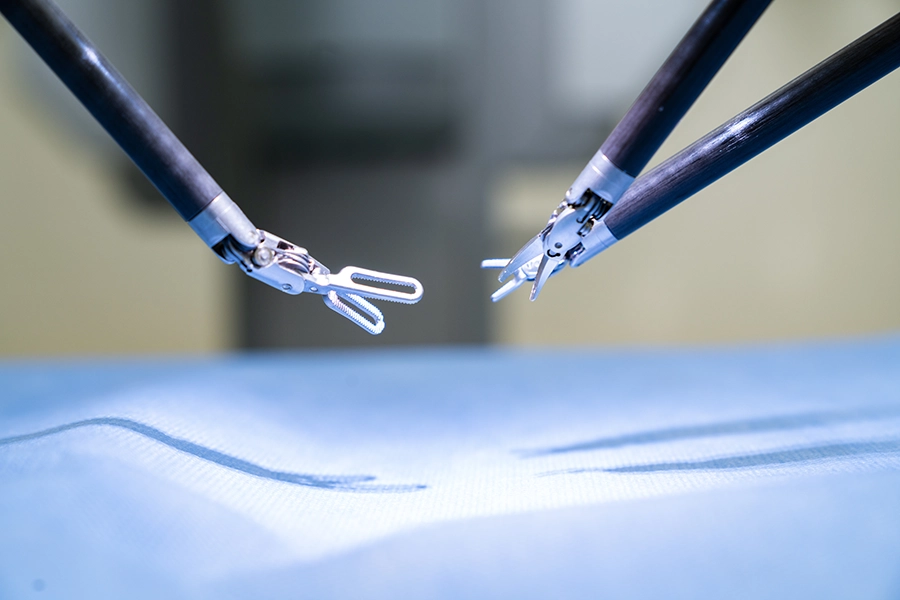
Surgical Tools and Robotics
- Piezo motors are enabling advancements in microsurgery and noninvasive surgical techniques.
- High precision movement of surgery instrument in MRI machines thanks to piezo motors being inherently non-magnetic. (LT20 non-magnetic)
- Sub-micron control of surgical Instruments for cochlear implant procedures. (LL06)
- Moving a cell analysis lever on a nanoscale during nanomechanical tissue diagnostics.
Diagnostic and Imaging Devices
- Piezo motors are utilized in high-resolution microscopy applications like Super Resolution Microscopy or AFM, providing sub-atomic resolution and fast response times for generating high-quality images and performing 3D imaging (Z-stack acquisition) and fast focusing. (LL06, LT20, LT40)
Medical Material Handling
- Piezo motors are used in pick-and-place systems and other automated equipment for handling delicate medical materials with precision. (LL06, LT20)
The ability of piezo motors to provide extremely precise, smooth, and force-controlled motion in compact, non-magnetic packages makes them invaluable for a wide range of advanced medical applications.
Piezoelectric motors are gaining prominence in the medical technology (medtech) sector due to their inherent advantages of compactness, precision, and exceptional performance.
Compared to traditional motors, they offer superior accuracy, compactness, and adaptability, making them well-suited for an increasing number of medical applications.
Here are some of the application areas in which piezo motors are utilized in medical technology equipment:
Imaging devices:
- In confocal microscopy, a technique employed in ophthalmology for quality assurance of implants, piezo motors precisely adjust the focal plane and execute surface scanning.
- Piezo actuators are used for focusing and control in endoscopes.
Surgical instruments and procedures:
- In microsurgery and noninvasive surgery, biomedical micro-tools such as tweezers, scissors, and drills are being adapted to microrobot bases powered by piezo motors, thereby enabling delicate and precise movements.
- Piezo motors play a pivotal role in robotic surgical systems, enabling precise motion control for surgical robots and augmenting the surgeonâs capacity to manipulate intricate tissues with unparalleled accuracy.
- In radiotherapy, piezo actuators control the individual leaves of multi-leaf collimators, ensuring precise alignment of the radiation beam to the tumor while minimizing damage to surrounding healthy tissues.
Drug delivery systems:
- Micropumps powered by piezo actuators are being developed for drug delivery systems. These pumps provide compact, energy-efficient, and dependable medication release, enabling precise control of dosing rates, down to picoliters, and durations.
- In microdosing and nanodosing applications, piezo actuators are utilized to pump and dispense minute volumes of liquids or gases with exceptional precision. This precision is paramount in specialized laboratory settings and medication administration.
The benefits of piezo motors in these applications include:
- Precision and miniaturization: They allow for movements at the nanometer scale and can be made extremely small, making them suitable for delicate procedures and embedded applications.
- Faster acceleration and response: Piezo devices can react in microseconds, achieving high acceleration rates.
- Lack of magnetic interference: They are not affected by strong magnetic fields and do not generate electromagnetic interference, making them ideal for MRI-compatible equipment and devices.
- No maintenance or lubrication: Piezo motion relies on crystalline effects and lacks rotating parts, resulting in maintenance-free operation and aseptic capabilities.
Piezo motor technology is still evolving, with the potential for further advancements and innovative applications in medical devices in the future. Their ability to provide extremely precise, smooth, and force-controlled motion in compact, non-magnetic packages makes them invaluable for a wide range of advanced medical applications.